By: Kenn Dixon, M.A., CDMP, APR
I was born and raised in New Orleans, where food is not just nourishment. It is memory. It is language. It is how we say I love you without saying a word. If you showed up at someone’s house hungry, that was your fault, not theirs. Someone would put a plate in your hand before you finished saying hello. We gathered around tables, laughed loud, talked over one another, and stayed long after the dishes were cleared. Family mattered. Fellowship mattered. Community mattered.
What we did not talk about was health.
Not really. Not honestly. Not in a way that named what was happening to us.
In my community, especially among African Americans living below the poverty line, illness moved quietly but consistently. Diabetes. High blood pressure. Stroke. Heart disease. These were not surprises. They were patterns. They were expected. Somebody always had an uncle who lost a leg. A cousin on dialysis. A parent juggling medications like a second job. We joked about it. We normalized it. We prayed about it. But we did not confront it.
We ate well. We ate together. We ate often. And we buried people too early. My father was one of them.
He had his first heart attack in his 50s. At the time, I told myself the same stories many of us tell. Stress did it. Work did it. Genetics did it. Life did it. All of that may be true, but it was incomplete. I did not yet connect the dots between culture, access, economics, education, and long-term health outcomes. I just knew something had cracked open.
Two years ago, in 2023, my father died. Not because he had to, but because he wanted to.
There is no clean way to say that. No polished version that makes it easier to hear or easier to live with. Grief does not announce itself. It shows up in waves, often when you least expect it. Sometimes it hits you standing in a grocery store aisle. Sometimes it hits you when a familiar dish is cooking. Sometimes it hits you when you realize you are the same age he was when his body started sending warning shots.
That realization stays with you. It forces you to take inventory. Of your habits. Of your silence. Of the things you keep postponing because tomorrow feels guaranteed.
For me, that inventory came with a long list of risks I could no longer ignore. Diabetes runs in my family. Heart disease runs in my family. Stroke runs in my family. Hypertension runs in my family. These are not abstract threats. They are names. Faces. Medical charts. Funeral programs. They are outcomes I have watched play out in real time.
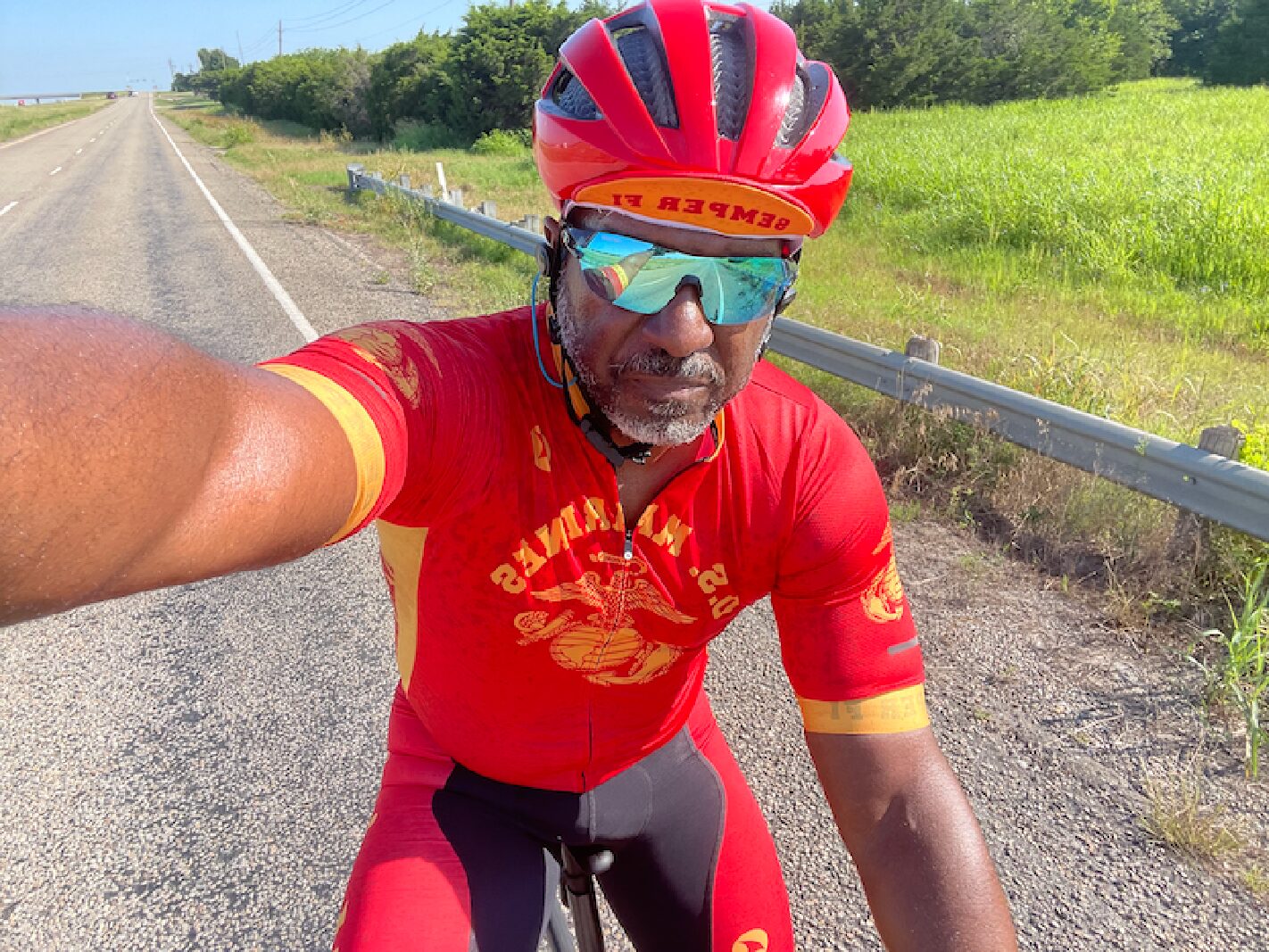
And layered on top of all of that is another truth. I am a United States Marine Corps veteran.
I served my country with pride. That service shaped me in ways I still carry today, both visible and invisible. I am also a service-disabled veteran. My body paid a price. Injuries do not disappear when the uniform comes off. They linger. They limit. They remind you daily that movement is no longer automatic.
Some days, pain shows up before motivation does. Some days, my body reminds me of places I have been and things I have done that do not show up on a resume. Add that to hereditary predispositions for heart disease, diabetes, and hypertension, and the math gets sobering fast.
The easy option would have been to slow down and accept it. To say this is just how it goes. To let age, injury, and family history write the rest of the story. I was not willing to do that.
So I got on a bike.
Not because I was chasing fitness trends or athletic milestones. Nobody was mistaking me for a professional cyclist. I got on a bike because I needed a way to move that respected my injuries but refused to let them define my limits. I needed motion without denial. Effort without ego.
Cycling met me where I was.
It gave me space to think. Space to grieve. Space to confront the truth without running from it. The bike is honest. It does not care about your title, your past, or your intentions. If you stop pedaling, you stop moving. If you push, you go somewhere. Some days that somewhere is far. Some days it is just around the block or on the indoor trainer. All of them count.
What started as something personal became something bigger.
For years, I rode across Texas in organized rides, rallies, and long-distance tours. Hot roads. Early mornings. Long miles. Legs that questioned my judgment around mile forty. All of it. I rode to bring awareness to health disparities that too often get discussed like theory instead of lived experience. I rode to raise money for scholarships for young people, because education and health are inseparable. You cannot talk about long-term wellness without talking about opportunity.
Those rides were not symbolic. They were practical. They funded futures. They started conversations. They made visible what often stays invisible. They also came with humor, because they had to.
If you cannot laugh at yourself wearing cycling gear in Texas heat, you are taking life too seriously. Cycling teaches humility fast. Headwinds do not care about your plans. Hills show up uninvited. Sweat is non-negotiable. The body tells the truth.
And the body, when given consistent care, responds.
I am under no illusions. A bike does not fix systemic inequality. It does not erase food deserts or replace access to quality healthcare. It does not undo decades of structural neglect. But it does something critical. It disrupts the narrative at the individual and community level. It creates momentum. It makes health visible. It opens doors to conversations that were never happening before.
People asked why I was riding. That mattered.
Young people saw someone who looked like them choosing health on purpose, even with injuries and risk stacked against him. That mattered. Communities gathered around a cause that touched us all. That mattered.
What I have learned is this. Culture is powerful. Service is powerful. Legacy is powerful. But none of those things are destiny.
We can honor where we come from without surrendering to outcomes that shorten our lives. We can respect service while still demanding longevity. We can keep the fellowship and change the habits. We can keep the flavor and change the frequency. We can talk about health without shame or judgment.
My father’s death still reminds me that I am his son. My service injuries still show up. My genetic risk factors are still real. None of that disappears. But none of it gets the final word.
The bike is part of how I push back.
It carries my grief. It carries my discipline. It carries my refusal to sit still just because it would be easier. It carries my commitment to move forward, even when movement hurts.
I ride for my past.
I ride for my family.
I ride for my fellow veterans, learning how to live in bodies that have been through conflict and service.
I ride for communities that taught me how to gather, but never taught us how to protect our health.
I ride because I am not done yet. And as long as I can move, I will.