Born Into It, Trained Through It, Riding Beyond It

By: Kenn Dixon, M.A., CDMP, APR

I was born and raised in New Orleans, where food is not just nourishment. It is memory. It is language. It is how we say I love you without saying a word. If you showed up at someone’s house hungry, that was your fault, not theirs. Someone would put a plate in your hand before you finished saying hello. We gathered around tables, laughed loud, talked over one another, and stayed long after the dishes were cleared. Family mattered. Fellowship mattered. Community mattered.

What we did not talk about was health.

Not really. Not honestly. Not in a way that named what was happening to us.

In my community, especially among African Americans living below the poverty line, illness moved quietly but consistently. Diabetes. High blood pressure. Stroke. Heart disease. These were not surprises. They were patterns. They were expected. Somebody always had an uncle who lost a leg. A cousin on dialysis. A parent juggling medications like a second job. We joked about it. We normalized it. We prayed about it. But we did not confront it.

We ate well. We ate together. We ate often. And we buried people too early. My father was one of them.

He had his first heart attack in his 50s. At the time, I told myself the same stories many of us tell. Stress did it. Work did it. Genetics did it. Life did it. All of that may be true, but it was incomplete. I did not yet connect the dots between culture, access, economics, education, and long-term health outcomes. I just knew something had cracked open.

Two years ago, in 2023, my father died. Not because he had to, but because he wanted to.

There is no clean way to say that. No polished version that makes it easier to hear or easier to live with. Grief does not announce itself. It shows up in waves, often when you least expect it. Sometimes it hits you standing in a grocery store aisle. Sometimes it hits you when a familiar dish is cooking. Sometimes it hits you when you realize you are the same age he was when his body started sending warning shots.

That realization stays with you. It forces you to take inventory. Of your habits. Of your silence. Of the things you keep postponing because tomorrow feels guaranteed.

For me, that inventory came with a long list of risks I could no longer ignore. Diabetes runs in my family. Heart disease runs in my family. Stroke runs in my family. Hypertension runs in my family. These are not abstract threats. They are names. Faces. Medical charts. Funeral programs. They are outcomes I have watched play out in real time.

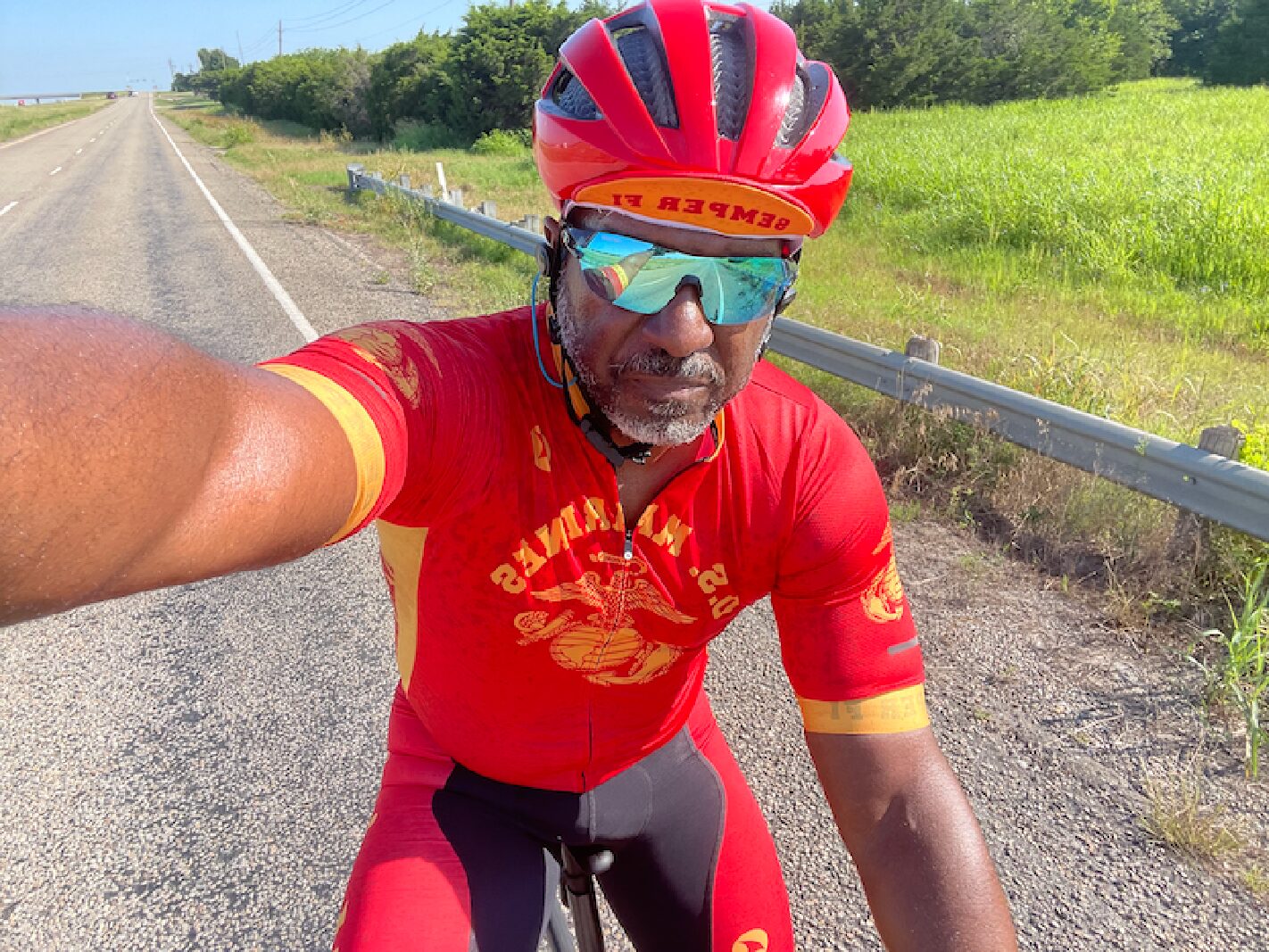
And layered on top of all of that is another truth. I am a United States Marine Corps veteran.

I served my country with pride. That service shaped me in ways I still carry today, both visible and invisible. I am also a service-disabled veteran. My body paid a price. Injuries do not disappear when the uniform comes off. They linger. They limit. They remind you daily that movement is no longer automatic.

Some days, pain shows up before motivation does. Some days, my body reminds me of places I have been and things I have done that do not show up on a resume. Add that to hereditary predispositions for heart disease, diabetes, and hypertension, and the math gets sobering fast.

The easy option would have been to slow down and accept it. To say this is just how it goes. To let age, injury, and family history write the rest of the story. I was not willing to do that.

So I got on a bike.

Not because I was chasing fitness trends or athletic milestones. Nobody was mistaking me for a professional cyclist. I got on a bike because I needed a way to move that respected my injuries but refused to let them define my limits. I needed motion without denial. Effort without ego.

Cycling met me where I was.

It gave me space to think. Space to grieve. Space to confront the truth without running from it. The bike is honest. It does not care about your title, your past, or your intentions. If you stop pedaling, you stop moving. If you push, you go somewhere. Some days that somewhere is far. Some days it is just around the block or on the indoor trainer. All of them count.

What started as something personal became something bigger.

For years, I rode across Texas in organized rides, rallies, and long-distance tours. Hot roads. Early mornings. Long miles. Legs that questioned my judgment around mile forty. All of it. I rode to bring awareness to health disparities that too often get discussed like theory instead of lived experience. I rode to raise money for scholarships for young people, because education and health are inseparable. You cannot talk about long-term wellness without talking about opportunity.

Those rides were not symbolic. They were practical. They funded futures. They started conversations. They made visible what often stays invisible. They also came with humor, because they had to.

If you cannot laugh at yourself wearing cycling gear in Texas heat, you are taking life too seriously. Cycling teaches humility fast. Headwinds do not care about your plans. Hills show up uninvited. Sweat is non-negotiable. The body tells the truth.

And the body, when given consistent care, responds.

I am under no illusions. A bike does not fix systemic inequality. It does not erase food deserts or replace access to quality healthcare. It does not undo decades of structural neglect. But it does something critical. It disrupts the narrative at the individual and community level. It creates momentum. It makes health visible. It opens doors to conversations that were never happening before.

People asked why I was riding. That mattered.

Young people saw someone who looked like them choosing health on purpose, even with injuries and risk stacked against him. That mattered. Communities gathered around a cause that touched us all. That mattered.

What I have learned is this. Culture is powerful. Service is powerful. Legacy is powerful. But none of those things are destiny.

We can honor where we come from without surrendering to outcomes that shorten our lives. We can respect service while still demanding longevity. We can keep the fellowship and change the habits. We can keep the flavor and change the frequency. We can talk about health without shame or judgment.

My father’s death still reminds me that I am his son. My service injuries still show up. My genetic risk factors are still real. None of that disappears. But none of it gets the final word.

The bike is part of how I push back.

It carries my grief. It carries my discipline. It carries my refusal to sit still just because it would be easier. It carries my commitment to move forward, even when movement hurts.

I ride for my past.
I ride for my family.
I ride for my fellow veterans, learning how to live in bodies that have been through conflict and service.
I ride for communities that taught me how to gather, but never taught us how to protect our health.

I ride because I am not done yet. And as long as I can move, I will.

When the APR Becomes Hollow: Living Up to the Letters We Earned

By: Kenn Dixon, M.A., CDMP, APR

The Accreditation in Public Relations (APR) is supposed to represent more than professional achievement; it’s a public promise. Those three letters say we’ve embraced a higher standard: that we’ll ground our counsel in research, think strategically, act ethically, and lead with integrity. Yet too many practitioners earn the credential, frame the certificate, and then carry on exactly as before, still reacting instead of planning, still mistaking output for outcome.

That failure is more than disappointing; it’s dangerous. When someone who holds the APR ignores its principles, they weaken the very trust they were trained to build. Executives don’t need cheerleaders; they need strategic counselors who can clarify complexity, weigh risks, and tell hard truths. When an “accredited” professional offers advice without evidence, data, or reflection, they betray not only their organization’s confidence but also the credibility of every communicator who truly practices the craft.

Strategic thinking is not a style; it’s a discipline. The APR process teaches us to slow down, ask questions, analyze stakeholders, and measure what matters. Abandoning those steps because “we already know what works” is professional arrogance disguised as experience. It tells leadership that public relations is decoration, not direction. And that’s how reputations crumble; slowly, from the inside.

The truth is, accreditation doesn’t make us experts. It calls us to become better experts, continually. To live up to the standards we pledged to uphold means using those principles when it’s inconvenient, when the room is tense, when it would be easier to say what people want to hear.

Those three letters only matter if they shape our daily work, our counsel, and our courage. The APR isn’t a finish line; it’s a vow. If we stop living by its values, then all we’ve earned is another frame on the wall, and the quiet erosion of trust that follows.

The Case for Fractional Leadership in Times of Transition

By: Kenn Dixon, M.A., CDMP, APR

Here’s what many leaders will not say out loud. You know your marketing and communications are not working the way they should. You also know hiring a full-time CMO right now is not the right move.

That gap is where I work.

I partner with organizations in rebuild or transition phases when leadership needs clarity, momentum, and direction without adding permanent headcount. You get senior-level marketing and communication leadership focused on stability and progress, not politics or long-term overhead.

When a full-time CMO is the wrong first step

Transitions create pressure. Teams are stretched. Priorities blur. Messaging drifts. The instinct is often to hire fast and hope a new executive fixes everything. That approach usually backfires.

A full-time CMO makes sense when strategy is clear, systems are stable, and leadership alignment already exists. In rebuild or transition seasons, those conditions rarely hold. What you need first is stabilization.

That means:
• Clear messaging
• Focused priorities
• Alignment between leadership and teams
• A realistic path forward

Without that foundation, even a strong CMO struggles.

What I actually do

My role is simple and practical.

I stabilize your messaging so everyone is telling the same story. Internally and externally.

I help reset priorities so your team stops chasing everything and starts focusing on what matters now.

I support your internal teams instead of replacing them. They keep ownership. I bring structure, direction, and outside perspective.

I give leadership clarity on next steps. Not theory (only if you need it). Not fluff. Clear decisions and sequencing.

You get senior-level guidance without adding headcount, benefits, or long-term risk.

Why messaging is usually the real problem

In almost every transition, messaging is the first thing to crack and the last thing leaders address. That is a mistake.

When your message is unclear:
• Sales slows
• Marketing tactics scatter
• Teams argue about direction
• Customers hesitate

People do not buy confusion. They do not follow noise. They respond to clarity.

That is why I use the StoryBrand framework.

How StoryBrand helps you win the day

StoryBrand forces discipline. It removes ego and complexity. It answers the questions your customers and donors already ask in their heads.

What do you do
Who is it for
Why should I care
What happens next

When your message answers those questions clearly, everything downstream improves. Websites convert. Sales conversations sharpen. Campaigns align. Teams stop guessing.

StoryBrand is not branding theory. It is operational clarity.

What this looks like in practice

We start by diagnosing where confusion exists. Messaging, structure, priorities, or all three.

We clarify your core message using StoryBrand so your organization speaks with one voice.

We align leadership around realistic priorities for the current season, not the ideal future state.

We equip your internal team with clear direction and guardrails so work moves forward without constant rework.

We define next steps so you know when a full-time CMO makes sense and what that role should actually own.

The goal is progress, not permanence.

Who this is for

This work fits organizations that are:
• Rebuilding after leadership change
• Navigating growth pains
• Recovering from stalled marketing
• Preparing for future executive hires
• Tired of guessing and reacting

If that sounds familiar, you are not behind. You are just in a transition.

Simple next steps

1). If you need clarity before committing to permanent hires, this model works.

2). If stabilizing your message and priorities would help you move forward right now, a short conversation makes sense.

3). No pitch. No pressure. Just clarity. Schedule a consultation call today.

If that is useful given where you are today, I would welcome the conversation.

Media Multiplexity Theory in One Page (What Every Church Communicator Needs to Know)

By: Kenn Dixon, M.A., CDMP, APR

If you want your church to strengthen relationships, reach the community, and grow, you need to understand one of the most important communication theories for ministry today: Media Multiplexity Theory (MMT). It explains why some churches thrive, some maintain, and others decline—based on how well they communicate.

The best part?
You can understand the entire theory in one page.

What Is Media Multiplexity Theory?

Developed by Caroline Haythornthwaite (2002), Media Multiplexity Theory says:

Strong relationships use more communication channels.
Weak relationships use fewer.
Latent relationships use none—yet.

MMT is built on three key ideas:

1. Strong ties require multiple channels

Families, close friends, committed groups—they stay connected through:

  • Face-to-face interaction
  • Phone calls
  • Texting
  • Social media
  • Email
  • Video meetings
  • Livestreams
  • Messaging apps

The more channels they use, the stronger the relationship.

2. Weak ties rely on one or two channels

These relationships exist, but barely.
Examples:

  • Someone who only sees your church on Facebook
  • A neighbor who only remembers your billboard
  • A community member who saw a mailer once

Weak ties are important because they are the doorway to new connections—but only if nurtured.

3. Latent ties are relationships waiting to happen

Latent ties are people who could be connected with your church but aren’t because no channel reaches them.

Examples include:

  • People living within 5 miles of the church
  • Parents at nearby schools
  • Community members who visit your website but never hear from you again
  • People who interact with your community partners but never hear about your church
  • Anyone who could find spiritual life through your church—if communication was consistent and diverse

In short:
MMT helps churches activate latent ties, strengthen weak ties, and reinforce strong ties.

Why This Theory Matters for Churches

Your dissertation confirmed what MMT predicts:

  • Churches using 3+ communication channels show stronger engagement.
  • Churches with fewer channels show weaker connections and lower attendance.
  • Churches with inconsistent communication see relational drift and declining relevance.

Think about what this means theologically:

  • Discipleship requires relationship.
  • Relationships require communication.
  • Communication requires multiple channels.

MMT is not just a communication theory—it’s a ministry strategy.

Practical Example for Churches

Imagine two churches:

Church A uses two channels:

  1. Pulpit announcements
  2. Facebook

Church B uses six channels:

  1. Pulpit announcements
  2. Facebook
  3. Instagram
  4. YouTube/Livestream
  5. Email newsletter
  6. Texting platform

Church A is likely to reach:

  • members
  • a few former members
  • a few casual Facebook followers

Church B is likely to reach:

  • members
  • former members
  • inactive members
  • neighbors
  • digital visitors
  • community partners
  • seekers online
  • unchurched families
  • parents in local schools

Church B isn’t “better”—it’s connected.

More channels = more relationships = more opportunities for ministry.

Why MMT Explains Church Growth

Church growth is relational, not mechanical.
MMT helps explain why some churches grow while others decline:

  • Growth happens when relational ties strengthen.
  • Relational ties strengthen when communication channels multiply.

This is exactly what your statistical models demonstrated across 25 churches.

The One-Page Summary

Here it is in one sentence:

If your church wants stronger relationships, broader reach, and deeper engagement, you need to use more communication channels, more consistently, with more intentionality.

This is Media Multiplexity Theory—simple, practical, and transformational for ministry.

What Local Churches Get Wrong About Growth

By: Kenn Dixon, M.A., CDMP, APR

Most churches want to grow.
But most churches misunderstand how growth works in a modern communication environment.

My research across 25 churches revealed several misconceptions that hold congregations back from reaching their communities and expanding their mission.

Below are the top mistakes—and how to correct them.

1. Believing That Events Bring People In

Events don’t grow churches.
Relationships grow churches.

My correlation tables revealed:

  • Event promotion posts did not predict baptisms.
  • Outreach flyers did not predict attendance.
  • Internal event reminders did not correlate with engagement.

Events can be powerful when supported by:

  • multi-channel communication
  • relational follow-up
  • community-driven content
  • personal invitations

But events alone do not produce growth.

2. Assuming People Know You Exist

Many churches believe visibility is not a problem.

The data disagrees.

Low engagement, low reach, and low awareness metrics show that most churches remain invisible to the broader community. Sahlin’s “invisibility” insight remains valid (more in the research study :-).

3. Treating Communication as Administration, Not Ministry

Church communication is often seen as:

  • uploading a graphic
  • typing an announcement
  • posting a livestream
  • printing a bulletin

These tasks are administrative.
Communication, however, is ministry.

It is:

  • relational
  • strategic
  • missional
  • intentional
  • people-centered

Churches that shift communication into the ministry category see growth.

4. Thinking Social Media Is Optional

Whether we like it or not, social media is the modern mission field.

My data shows:

  • higher AvgPostEngage correlates with stronger church participation
  • churches with more video content have higher relational closeness
  • minimalist or inconsistent channels show weaker ties

Social media does not replace in-person ministry—
it amplifies it.

5. Focusing on Content Quantity Instead of Content Purpose

Posting more will not fix ineffective communication.
Posting better will.

The content coding revealed:

  • Too much internal content
  • Too many administrative posts
  • Too little community connection
  • Too few spiritual encouragement posts
  • Almost no storytelling

Purpose drives engagement.
Engagement drives relationships.
Relationships drive growth.

6. Using Only One or Two Channels

My research confirmed the core claim of Media Multiplexity Theory:

Strong ties are built through multiple channels.
Weak ties remain weak through limited channels.

Churches need multichannel ministry because people live multichannel lives.

7. Expecting Growth Without Engagement

Growth never precedes engagement.
It always follows it.

Engagement builds:

  • awareness
  • trust
  • belonging
  • participation
  • discipleship

Attendance growth is the outcome of consistent relational connection.

The Good News: Every Mistake Is Fixable

Churches don’t need:

  • more money
  • more staff
  • more technology
  • more programs

They need a communication strategy rooted in relationships, relevance, and resonance.

My research shows that when churches communicate well—using multiple channels with consistent, community-centered messaging—they see stronger engagement and more spiritual outcomes.

The “Not Your Mom” Guide to Audience Targeting

By: Kenn Dixon, M.A., CDMP, APR

Reaching the right audience starts with a painfully simple truth: not everyone is your audience. And if the only person consistently liking your posts is your Aunt Linda, it’s time for an intervention. Aunt Linda is loyal, but she is not your growth strategy. Effective audience targeting means stepping back from assumptions and drilling into who actually benefits from, funds, or amplifies your work.

Start by identifying your top three audience groups. Use demographic data to understand who they are on paper, and psychographic data to understand what keeps them up at night. What do they value? What do they fear? What motivates them to act? This level of clarity stops you from throwing spaghetti at the wall and praying something sticks.

Next, map where your audience actually spends time. Spoiler: it may not be Facebook. Younger donors live on Instagram and TikTok. Corporate partners spend time on LinkedIn. Community members might prefer email or in-person events. When you understand behaviors, you can go where the attention already exists instead of shouting into the digital void.

Four Tips

  1. Build Personas Based on Reality, Not Assumptions: Use surveys, interviews, and analytics to define who your audience actually is—not who you wish they were.
  2. Map Their Digital Neighborhoods: Identify where each audience spends their time online. Meet them where they already are, not where you’re most comfortable posting.
  3. Speak Their Language: Mirror your audience’s tone, pace, and vocabulary. If your audience doesn’t talk like a board memo, neither should your messaging.
  4. Test and Adjust Quarterly: Audiences evolve, so your targeting should too. Review data every 90 days and refine your personas accordingly.

Finally, tailor your message so it resonates. The secret is simple: write the way your audience thinks, not the way your leadership team talks. If they crave hope, speak to hope. If they crave proof, provide data. If they want solutions, get to the point.

Want more resources, tips and tricks? Visit www.yourmessageclarified.com

Stop Guessing — Start Researching Your Community

Frustration

By: Kenn Dixon, M.A., CDMP, APR

If your church had to take a guess right now:
What does your community need most?

Hope?
Childcare?
Financial guidance?
Mental health support?
Events for kids?
Sermons that answer their questions?
A sense of belonging?
Help with loneliness?
Marriage support?
Prayer?

Most churches answer based on assumptions—not research.

In my dissertation, I identified a significant disconnect between what churches think people need and what communities actually need. This disconnect leads to:

  • poor attendance at outreach events
  • misaligned sermon series
  • wasted evangelism funds
  • low engagement online
  • little to no community trust
  • minimal baptisms or professions of faith

The fix is simple:
Stop guessing. Start researching.

Why Churches Don’t Do Research (But Should)

Churches often skip research because they believe:

  • “We already know what our community needs.”
  • “We have the Gospel. What more research do we need?”
  • “We’ve always done ministry this way.”
  • “We don’t have time.”
  • “We don’t have expertise.”

But research doesn’t replace spiritual discernment—
it informs it.

The early church did this intuitively:

  • Paul studied local cultures and religions.
  • Jesus tailored His teaching to His audience.
  • The apostles contextualized the Gospel for Jews and Gentiles.

Research is simply understanding your mission field.

Five Simple Ways to Collect Community Insight

1. Conduct a Community Survey (Online + Offline)

Ask questions like:

  • What do you think is the greatest need in our neighborhood?
  • What resources do you wish churches offered?
  • What topics would you attend a workshop or seminar about?
  • What types of community events interest you?

Use:

  • Google Forms
  • QR codes
  • Facebook polls
  • Flyers
  • Post-event sign-up cards

You will be shocked at the responses.

2. Analyze Public Demographic Data

Your local Chamber of Commerce, census data, school district reports, and nonprofit organizations can tell you:

  • age distribution
  • ethnicity and languages
  • income brackets
  • education levels
  • family structure
  • community pain points

This directly shapes your communication strategy.

3. Listen to Social Media Conversations

Local Facebook groups, neighborhood apps (Nextdoor), and community pages will tell you what your neighbors care about.

Look for:

  • recurring concerns
  • upcoming events
  • seasons of stress
  • community opportunities
  • local tragedies and needs

This is real-time ministry intelligence.

4. Interview Local Leaders

Talk to school principals, nonprofit directors, city officials, teachers, business owners, and community organizers. Ask:

  • What challenges do families face?
  • Where are the gaps in support?
  • How can the church help?

No one knows the mission field better than those serving it daily.

5. Run a Simple Communication Audit

Your church should ask:

  • Who is responding to our content?
  • What content performs best?
  • What platforms show strongest community reach?
  • Are we reaching anyone who is not a member?

Your dissertation’s engagement data supports this fundamental truth:

You cannot reach the community you refuse to study.

Why Research Strengthens Communication

Research does three things:

1. It removes assumptions.

It forces churches to see reality instead of tradition.

2. It improves messaging.

You begin speaking to people, not at them.

3. It increases relevance.

When you address real needs, people listen.

What Research Does Not Mean

It does not mean compromising doctrine.
It simply means contextualizing communication.

Jesus did it.
Paul did it.
Missionaries have always done it.

The church must return to the discipline of understanding its audience before speaking to it.

Offer for your ministry: If you feel like you’ve been marketing your ministry without a playbook, you’ll love your custom marketing report! Take the free assessment (a $497.00 value) at https://bit.ly/4rWVZ0F.

What the Data Reveals About Church Communication Today

Digital marketing media

By: Kenn Dixon, M.A., CDMP, APR

My PhD dissertation analysis across 25 Texas churches over 24 months revealed a clear pattern: churches are communicating, but not effectively—at least not if the goal is community engagement, attendance growth, and new disciples.

Below is the distilled story the data tells. The full published manuscript will be available in mid-2026. I will share the link when it is online. 🙂

1. Churches Are Posting Regularly—but Mostly to Themselves

Many churches believe frequency equals effectiveness.
But when the type of content is analyzed, the picture shifts dramatically.

Across the sample:

  • Most posts were internal.
  • Most livestream content was internal.
  • Most website updates were internal.
  • Most announcements were internal.

Only a small percentage of content targeted the community or spoke to their needs.

Internal Content Dominated Across Categories

Coded themes showed:

  • Worship/Spiritual Life – high frequency
  • Church Community (internal life) – high frequency
  • Administrative announcements – extremely high frequency
  • Event promotion – high frequency
  • Community service/outreach – lowest of all five categories

The irony is striking:
The content category with the most potential for external engagement was the least used.

2. Channel Count Matters—A Lot

One of the clearest findings:
Churches that used 3 or more communication channels consistently exhibited stronger engagement patterns.

Churches using only:

  • Facebook + pulpit announcements
  • or
  • A website + Sabbath livestream

…showed weaker community ties.

This aligns directly with Media Multiplexity Theory:

More channels = stronger relational ties.
Fewer channels = weaker ties.

3. Event Promotion Has Almost Zero Correlation With Baptisms

This is one of the most important insights for pastors and church leaders.

Data correlation tables revealed:

  • Event promotion posts did not significantly predict baptisms.
  • Outreach-themed content did not directly correlate with conversion rates.
  • Even worship-themed content had only moderate relational effects.

Programs alone do not bring people in.
People bring people in.
Relationships bring people in.
Consistency across channels builds those relationships.

4. The Data Shows Churches Are Not Reaching Beyond Their Walls

Livestream view counts, average post engagement, share rates, and comments all pointed to one reality:

Churches are reaching members, not neighbors.

This is not a failure—it is feedback.

The content is not positioned for outsiders.
The channels are not calibrated for them.
The messaging is not contextualized for them.

5. Churches That Use Video Well Perform Better

AvgViewCount, AvgPostEngage, and LivestreamUse all revealed high correlations with broader engagement. These acronyms will make sense when you see the full report…lol.

Specifically:

  • Video content increases relational closeness.
  • Livestream consistency increases trust and predictability.
  • Sermon clips perform better than long-form uploads.
  • Videos featuring people outperform videos featuring events.

Churches that treat YouTube as a channel of ministry—not just an archive—show stronger community awareness.

6. Attendance Growth Is Associated with Multichannel Engagement

Within the data, a positive correlation was found between channel count and attendance growth.
It doesn’t guarantee growth—but it strongly predicts greater growth potential.

Churches with stagnant channels had stagnant attendance.
Churches with fewer channels had fewer opportunities for relational touchpoints.

7. Churches Are Producing Content—But Not Strategy

The biggest takeaway:

Churches are busy.
Churches are active.
Churches are posting.
But churches are not strategic.

The data suggests that most content is reactive:

  • Announcements about events
  • Last-minute promotions
  • Weekly worship reminders
  • Pastoral messages to members
  • Volunteer requests

None of these are inherently wrong. But none of them are designed to reach the unchurched. If the church wants to engage its community, communication must shift from informing insiders to inviting outsiders.

The Great Commission Requires Great Communication

By: Kenn Dixon, M.A., CDMP, APR

Every church knows Matthew 28. Many can recite it by memory. But few churches treat the Great Commission as a communication mandate, even though Jesus’ instruction—“Go… teach… make disciples”—cannot happen without clear, culturally relevant communication.

The language of Scripture is profoundly relational. The Gospel is transmitted person to person, through message, conversation, storytelling, presence, and engagement. Yet in many local churches today, communication has become an afterthought, relegated to announcements, bulletin boards, and sporadic social media posts.

If we take the Great Commission seriously, we must take communication seriously.

Communication Is Not Optional—It Is the Delivery System of the Gospel

People must hear before they can believe.
People must see before they can trust.
People must understand before they can follow.

In an age dominated by digital media, mobile devices, and endless distractions, the church can no longer assume that its message will be heard simply because it exists.

The Gospel Is Eternal, but Its Communication Is Cultural

The message does not change.
The methods always have.

Jesus communicated through parables—stories drawn from agriculture, money, family dynamics, and village life. Paul communicated through letters—choosing the most efficient, audience-specific medium of his time. The early church communicated through public reading, oral tradition, hospitality, and handwritten scrolls.

Today, the way people communicate has fundamentally shifted:

  • Digital over analog
  • Visual over verbal
  • Mobile over static
  • Interactive over one-way
  • Personalized over generalized

This means churches must think of themselves not only as spiritual communities, but as communicating communities.

A Mandate That Extends Beyond the Church Walls

Your dissertation’s case study revealed a sobering insight:
Most churches invest their communication energy on internal audiences—members—not the community.

Jesus said, “Go… into all nations.”
Not “Wait… and see who shows up.”

But churches often do the opposite:

  • The bulletin is for insiders.
  • The livestream is for insiders.
  • The announcements are for insiders.
  • The programs are for insiders.
  • The stories told are insider stories.

This internal focus leads to stagnation, decline, and disengagement—your data confirms this.

The Great Commission Is an Outward-Facing Communication Strategy

To “go” means:

  • Identify an audience.
  • Understand their needs.
  • Speak their language.
  • Use relevant communication channels.
  • Build relational trust over time.
  • Invite them into deeper relationship with Christ.

Every one of these actions is a communication act.

Why Communication Matters More Than Ever

Three realities make modern communication central to disciple-making:

1. People live online before they arrive in person.

A church without a meaningful digital presence is invisible.
Your data echoes this—churches using only 1–2 channels show lower attendance and weaker engagement.

2. Trust is relational, not institutional.

People believe people, not announcements.
Effective communication builds trust long before they walk through the doors.

3. Discipleship begins long before someone attends worship.

Every post, message, livestream, or website visit is part of the disciple-making journey.

When churches limit communication to Sunday morning announcements or internal messaging, they disconnect the Great Commission from the communication it requires.

Breaking the Myth: “If We Just Preach the Truth, People Will Come”

This assumption—common in many denominational traditions—has good intentions but poor results. Truth matters. But communication determines whether truth is:

  • heard
  • understood
  • believed
  • embraced

In a culture where people are overwhelmed with content and struggling with attention fragmentation, the most accurate message is meaningless if it does not reach people where they are.

Your research revealed no significant correlation between event-promotion posts and baptisms.
But it did reveal meaningful correlations between multi-channel communication patterns and higher engagement.

The Great Commission is not fulfilled by content alone—it is fulfilled by connection.

Communication Is Ministry. Ministry Is Communication.

When churches begin seeing communication as ministry, everything shifts:

  • Announcements become invitations.
  • Livestreams become pathways for connection.
  • Social media becomes digital evangelism.
  • Websites become front doors.
  • Texting becomes pastoral care.
  • Visual storytelling becomes testimony.

This is not about marketing the Gospel.
This is about communicating the Gospel.

Your Church Has a Message Worth Sharing—Now Share It Well

The world is not rejecting Jesus.
They often simply have not heard a compelling invitation from His people.

The Great Commission is not only about going physically.
It is about communicating intentionally.

The churches reaching their communities today understand this truth:

The Gospel moves at the speed of communication.
Disciple-making moves at the speed of relationship.

If your church wants to reach its community, communication cannot be a task or a role.
It must be part of your identity.

Why Most Churches Only Talk to Themselves (and How to Break the Cycle)

By: Kenn Dixon, M.A., CDMP, APR

Most churches genuinely believe they are communicating well. Bulletins are printed, announcements are made, the livestream goes up, and posts hit Facebook every week. Yet for all this activity, the same pattern repeats itself: outreach events attract mostly members, evangelistic initiatives fall flat, and the community remains disengaged or unaware that the church even exists.

This isn’t a theology problem.
It’s a communication problem.

The Invisibility Crisis

Monte Sahlin said it best: the greatest communication challenge for many churches is invisibility, not hostility. People aren’t rejecting the church—they simply don’t know it’s there.

The story you uncovered in your dissertation research across 25 Seventh-day Adventist churches in Texas is not unique to Adventism. It’s a reflection of a national trend:
Churches are faithfully talking, posting, announcing, and promoting—but largely to themselves.

Your analysis of 24 months of communication data shows the same cycle playing out across region after region:

  • Posts are mostly internal.
  • Content is about events, not people.
  • Messages reflect the church’s interests, not the community’s needs.
  • Channels are underutilized or siloed.
  • Communication frequency is inconsistent.
  • And ultimately, the community is not engaged.

This is not failure.
It is misalignment.

Why Churches Default to Internal Communication

There are four primary reasons most churches talk to themselves:

1. Familiarity is easier than strategy.

Churches know their members. They know their language, their preferences, their rhythms. Communicating internally feels natural. Speaking to outsiders feels risky.

2. Events—not people—drive the communication calendar.

Most communication in the local church exists to promote events, not nurture relationships. This is the opposite of what healthy organizations do.

3. Churches assume relevance instead of assessing it.

Because a program matters to the congregation, leaders assume it matters to the community. Your data shows this assumption is incorrect.

4. Churches measure activity, not outcomes.

Bulletins printed? Check.
Posts published? Check.
Video uploaded? Check.

But those are inputs, not impact.

The Result: The Church Becomes an Echo Chamber

Inside the building, communication feels active, even busy.
Outside the building, communication feels silent.

The church becomes an echo chamber—broadcasting announcements to a closed, internal loop. People outside the church never hear the message, and people inside the church steadily disengage because communication feels disconnected from real life.

Your research revealed an important insight:

The more a church focuses on internal messaging, the less it grows.

Churches with the highest baptisms and professions of faith used broader and more diverse communication channels. Churches with stagnant or declining growth used fewer, internally-focused communication methods.

This aligns directly with Media Multiplexity Theory:
Strong ties require multiple channels. Weak ties never grow without them.

Why This Matters Now More Than Ever

Three cultural shifts make internal-facing communication especially ineffective today:

  1. Communities are more digital than physical.
    People look online before looking around.
  2. Attention is more fragmented.
    If you are not part of the digital stream, you do not exist.
  3. Trust is earned through connection, not content.
    People respond to authenticity, not announcements.

Many churches continue behaving as though the community will simply walk in because the doors are open. But the world has changed.

And the church must change how it communicates.

Breaking the Cycle: From Inward to Outward Focus

If a church wants to grow, wants to reach new people, and wants to fulfill the Great Commission in a digital age, it must intentionally break free from internal communication patterns.

Here are the three first steps:

1. Go from “What do we want to say?” to “What does our community need to hear?”

Not every message is for every audience.
Your research shows that posts about community service or spiritual encouragement build stronger ties than event promotion.

2. Stop announcing and start engaging.

Announcements impart information.
Engagement creates connection.

Ask questions. Tell stories. Share testimonies. Highlight community needs. Celebrate people, not programs.

3. Use more than one channel.

This is the heart of Media Multiplexity Theory.
People become connected when the church shows up across channels, consistently and relationally.

Facebook alone isn’t enough.
A bulletin alone isn’t enough.
One livestream a week isn’t enough.

Multiple channels → stronger relational ties → higher engagement → increased attendance → more disciples.

Your data quantifies what ministry leaders have long felt intuitively.

A Roadmap Forward

This entire 16-week series is built to help churches stop talking to themselves and start engaging the people they’re called to reach.

Today’s post is your starting point.
The next 16 posts will walk your readers—church communication volunteers, pastors, and ministry leaders—through a full transformation of how they communicate.

If the church wants to reach its community, it must start by changing who it is talking to.