Determined: Turning a Health Crisis into a Scholarship Movement
How a personal challenge became a participatory platform for health education and student opportunity
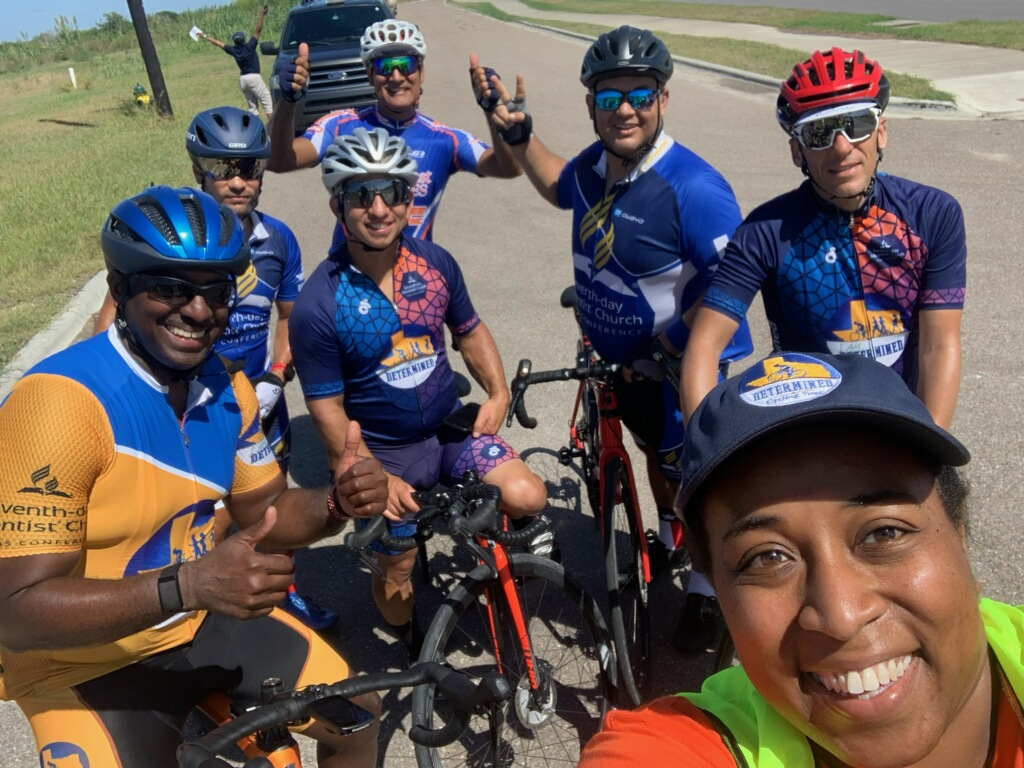
Dr. Kenn Dixon, LSSGB, APR
Founder and organizer of Determined Cycling
AT A GLANCE
| 2015 | 6 | Thousands | > $1.5M |
| First organized tour | Tours completed by 2022 | Miles ridden for education | Updated endowment outcome |
Public milestones documented through 2022 | Updated endowment outcome supplied for this case study
Executive Summary
Determined began with a physical limitation and became a platform for student opportunity. Military injuries had narrowed the exercise options available to me. After a health scare, cycling offered a practical way to rebuild strength. In 2015, that personal response became an organized ride from Dallas to San Antonio for the Seventh-day Adventist Church General Conference Session. By 2022, I had personally organized six tours, ridden thousands of miles, and helped raise more than $150,000 toward an education endowment.
The larger outcome was not a ride or even a campaign total. Determined created a way for people to participate in a shared mission. Cyclists trained and raised support. Schools adopted riders and followed their progress. Students welcomed them with rallies, banners, and lessons connected to the tour. Donors funded access to education. Sponsors and volunteers supplied resources. Satellite tracking let families, students, and organizers follow the journey while adding a layer of safety in areas without reliable cell coverage.
The initiative later exceeded its original $1.5 million goal, according to the updated campaign outcome provided for this case study. That result matters. But the deeper lesson is how they achieved it: they translated a private challenge into a public purpose, then designed it so many people could see themselves in the work. Determined demonstrates that a durable movement grows when a clear cause, a visible challenge, meaningful participation, sound operations, and measurable progress reinforce one another.
The Strategic Question
How can a personal health challenge become a credible, repeatable movement that mobilizes people around educational access? Determined answered that question by connecting two needs that might otherwise have remained separate: adults needed a compelling way to pursue health and community, while students needed financial pathways into Seventh-day Adventist education.
The Challenge Behind the Challenge
The visible challenge was physical. Injuries from my military service limited the kinds of exercise I could sustain. A later health scare made inaction a poor option. Cycling offered lower impact exercise, but simply buying a bicycle would not have created a movement. The strategic challenge was to give the activity a purpose larger than personal recovery.
Education provided that purpose because the issue was both personal and institutional. My own educational journey was uneven. I didn’t appreciate every opportunity when I was young, and financial constraints interrupted my time at Oakwood. Later, as a teacher, chaplain, youth pastor, education evangelist, and parent, I came to understand both the value of Christian education and the sacrifices families make to obtain it. That history gave the campaign emotional truth. I was not raising money for an abstract program. I was riding for students whose choices could be constrained by cost.
The Reframe
The breakthrough was to stop treating cycling as the end and use it as the organizing vehicle. The first tour, then called Tour de Youth, linked a demanding ride with a timely destination and a cause people already cared about. The name later evolved into Determined Cycling, but the core promise remained simple: we cycle for our health, and we ride for their future.
The Journey from Event to Movement
| Stage | What happened | Why it mattered |
| Constraint | Military injuries and a health scare narrowed viable exercise options. | The effort began with a genuine problem, giving the story credibility and urgency. |
| Personal response | Cycling became a workable path back to physical activity. | A visible discipline replaced a private intention and made progress observable. |
| 2015 launch | A group rode from Dallas to San Antonio during the General Conference Session. | A personal practice became a shared challenge connected to a larger gathering. |
| Expansion | The group organized tours for educational causes, including two fundraisers associated with Oakwood University. | The model proved portable across institutions and communities. |
| 2022 milestone | Six organized tours, thousands of miles, and more than $150,000 raised were publicly documented. | Repeated execution demonstrated that the work was a platform, not a one-time stunt. |
| Endowment scale | The campaign pursued a $1.5 million Texas Conference education endowment and later exceeded that amount. | A finite event contributed to a long-term funding mechanism for student access. |
Each stage reduced a different barrier. The original ride gave the idea visibility. Repetition created credibility. Institutional alignment connected the ride to a durable purpose. The endowment gave donors a long horizon. School and student participation made the mission tangible, and technology made the experience safer and easier to share.
How Participation Was Designed
Many fundraising events ask people to watch, applaud, and donate. Determined gave stakeholders distinct roles. That shift from audience to participant was the movement-building mechanism.
| Participant | Role in the movement | Value created |
| Cyclists | Train, ride, fundraise, model healthy behavior, and represent an assigned school. | Courage, visibility, peer invitation, and a human face for the cause. |
| Schools | Welcome riders, organize rallies, communicate with families, and connect classrooms to the route. | Local ownership and repeated touchpoints beyond a single event day. |
| Students | Track riders, create signs, attend greetings, and learn through tour-related activities. | The beneficiaries become active participants rather than distant symbols. |
| Donors | Support riders, sponsor the campaign, and contribute to the endowment. | Personal connection to a visible effort and a lasting education outcome. |
| Volunteers | Support logistics, meals, lodging, communications, and route operations. | Capacity and community hospitality across a multi-day tour. |
| Technology partners | Provide GPS visibility, satellite communication, and emergency capability. | Safer operations plus a shared digital window into the journey. |
Technology as Both Safety and Story
A multi-day cycling tour creates operational risk. Riders may travel several hundred miles, cross state lines, cover as many as 120 miles in a day, and pass through areas without dependable cellular service. For Determined, tracking could not be a novelty. It had to support real decisions.
Organizers used lightweight SPOT Trace devices mounted to bicycles, along with the SPOT My Globalstar mapping platform. The system provided near-real-time location visibility for organizers and a shareable view for students, sponsors, and supporters. SPOT X two-way satellite messengers added communication and SOS capability outside cellular coverage.
That technology served two strategic purposes at once. Operationally, it helped organizers know where riders were and offered an emergency communication option. Relationally, it allowed supporters to follow the route, anticipate arrivals, and greet cyclists with pep rallies, banners, and signs. The map turned distance into a shared experience. People who could not ride could still participate.
Preparedness Builds Trust
My Marine training shaped the approach. Long-distance cycling requires optimism, but it also requires redundancy, visibility, and preparation for the moment no one wants. As I explained in the Globalstar case study, the hope is never to use the SOS function; its value is knowing the connection is there if needed. Safety did more than protect the riders. It signaled that the campaign respected its participants and took stewardship seriously.
The Education Loop
The most distinctive element of Determined was how the ride entered schools’ lives. Riders were assigned to schools. Children and sponsors could follow their progress. Schools organized welcomes. Some classrooms incorporated the tour into curriculum by studying comparable events such as the Tour de France.
This created a reinforcing loop. The ride gave teachers a live subject. Classroom attention gave students a reason to follow. Student enthusiasm energized riders and donors. The riders brought the campaign back into communities. Those interactions generated stories, photos, conversation, and new invitations to participate. The fundraiser became an educational experience, and the educational experience strengthened the fundraiser.
Why the Model Worked
Authenticity. The origin story was true, specific, and connected to a recognizable need.
Mission alignment. Health, education, service, and faith were expressed through one visible act.
Narrative structure. A demanding journey created natural milestones, anticipation, and story tension.
Multiple entry points. People could ride, give, volunteer, host, teach, track, welcome, or sponsor.
Shared visibility. GPS tracking made progress observable and linked distant participants to the road.
Institutional durability. The endowment converted short-term energy into long-term educational capacity.
Results and Meaning
By May 2022, the public record documented six personally organized tours, thousands of miles ridden, and more than $150,000 raised during the two Texas Conference tours then completed. The campaign was working toward a $1.5 million endowment intended to provide scholarships for students who wanted a Christian education but needed additional financial help. The updated outcome supplied for this case study places the fund above $1.5 million.
The financial outcome is significant, but dollars alone understate the return. Determined also produced a network of relationships, a repeated event platform, a health witness, classroom engagement, sponsor value, volunteer experience, and a body of stories that made the cause visible. Those are not substitutes for money; they are the participation assets that helped money move.
The Determined Movement Model
The experience can be translated into a practical sequence for leaders who want to turn a personal challenge into a public cause.
1 Start with a real constraint
Name the lived problem honestly. Credibility begins before the campaign language.
2 Connect it to a mission
Link the personal response to an outcome that matters beyond the founder.
3 Create a visible challenge
Choose an action with milestones people can follow and a finish that means something.
4 Give stakeholders roles
Design meaningful ways to ride, give, host, teach, track, volunteer, and welcome.
5 Build for safety and trust
Treat logistics, communication, risk planning, and transparency as part of the message.
6 Convert attention into an asset
Use the event to build a fund, curriculum, relationships, and repeatable infrastructure.
7 Measure movement
Track both money raised and the people, behaviors, partnerships, and student outcomes created.
What Leaders Should Measure
A movement should not be evaluated by activity alone. A useful scorecard separates what the campaign produces from what changes because people participated.
| Level | Examples | Management question |
| Inputs | Riders, volunteers, routes, school partners, sponsors, communications, safety resources | Did we assemble the capacity to execute responsibly? |
| Engagement | Miles, donations, tracking views, rally attendance, classroom participation, inquiries | Did people interact with the campaign in meaningful ways? |
| Outcomes | Endowment growth, scholarship access, repeat donors, returning riders, new partnerships, health behavior | Did participation create durable change for students and the community? |
Leadership Lessons
Determined taught me that purpose becomes powerful when people can enter it. A founder may carry the original burden, but a movement grows only when the mission is no longer organized around the founder alone. The cyclist matters. The child holding the sign matters. The teacher turning the route into a lesson matters. The donor, volunteer, sponsor, driver, host, and safety partner all need to see how their action advances the same outcome.
It also taught me that technology works best when it strengthens a human relationship. The tracking map was valuable because it helped organizers protect people and helped students feel close to the riders. The device did not create the movement. It made participation safer, more visible, and easier to share.
Finally, Determined showed that a temporary event can serve a permanent purpose. The wheels stopped at the end of each tour, but the endowment was designed to keep working. That is the strategic move: use the urgency of a moment to build an asset that outlives the moment.
Conclusion
Determined did not begin as a master plan to raise more than $1.5 million. It began with the need to respond to injury and a warning about health. Cycling created a path forward. Education gave that path meaning. Participation gave it scale. Safety and tracking technology helped people trust and follow the journey. Repetition turned an event into a platform, and the endowment turned a platform into lasting capacity.
That is the central case: personal adversity can become public value when leaders connect an authentic story to a clear mission, design meaningful roles for others, and build a structure capable of carrying the energy beyond a single event. The strongest movements do more than ask people to support a cause. They help people become part of it.
Source Notes
Texas Conference of Seventh-day Adventists. The Cycling Pastor. May 4, 2022. Documents the 2015 launch, six tours, thousands of miles, more than $150,000 raised through two Texas Conference tours, and the stated $1.5 million endowment goal.
Globalstar. Marathon Cyclists Choose SPOT for Tracking and Safety. Documents school assignments, curriculum engagement, route conditions, SPOT Trace tracking, the shared mapping platform, SPOT X satellite communication, and SOS capability.
Updated campaign outcome. The statement that the education endowment surpassed $1.5 million was supplied by Kenn Dixon in the September 2026 case study brief. It is presented here as an updated project figure and is not attributed to the 2022 public profile.